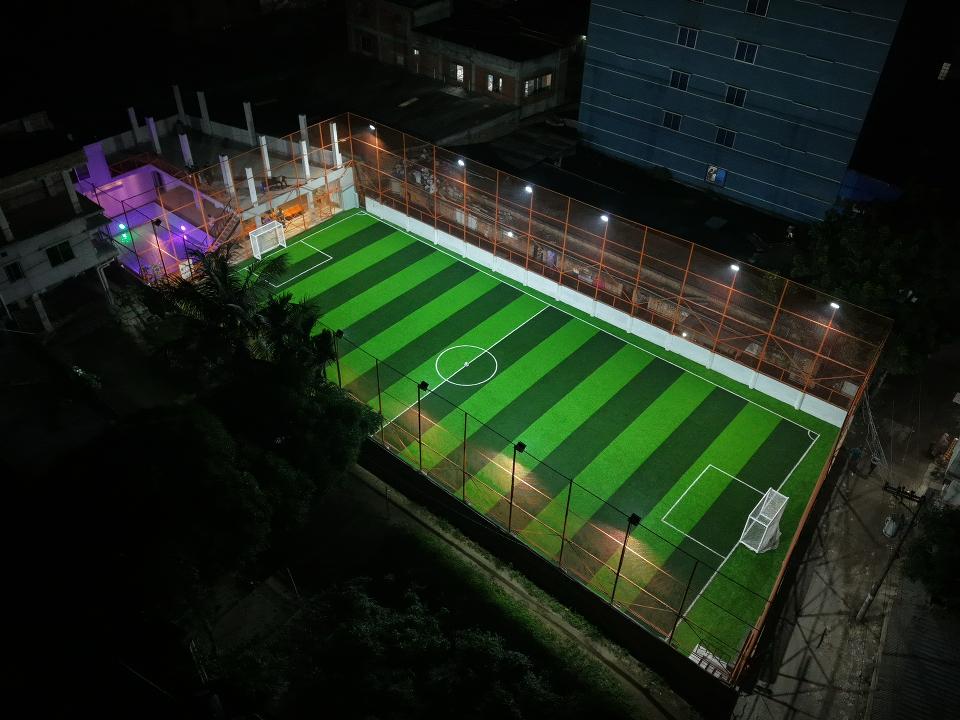
Types of Turf
There are mainly two types used for football:
3G Turf (Third Generation)
Made with long synthetic fibers and infilled with sand and rubber granules.
Closely mimics natural grass in terms of ball roll, bounce, and player movement.
4G Turf (Fourth Generation)
Similar to 3G but usually without rubber infill.
Offers better shock absorption and is more environmentally friendly.
Advantages of Turf Football
Durability: Can handle heavy usage without damage.
All-weather play: Drains water quickly, so games can continue after rain.
Low maintenance: No need for mowing, watering, or fertilizing.
Consistent surface: Reduces uneven patches, making ball movement more predictable.
Disadvantages
Higher initial cost: Installing turf is expensive.
Heat retention: Artificial grass can get very hot in sunny conditions.
Injury risk: Some studies suggest higher risk of abrasions or certain joint injuries.
Limited lifespan: Usually lasts 8–12 years before needing replacement.
Game Play Differences
Ball rolls faster due to smoother surface.
Sliding tackles are harder because turf is less forgiving.
Shoes with turf or rubber studs are recommended over traditional cleats.
Maintenance of Turf
Even though turf is low maintenance, it still requires care:
Regular brushing to keep fibers upright.
Cleaning debris and litter.
Sanitizing to prevent bacteria and odor buildup.
Checking infill levels periodically for even surface.
 mahabub
January 5, 2026
mahabub
January 5, 2026